
Tech in Tamim
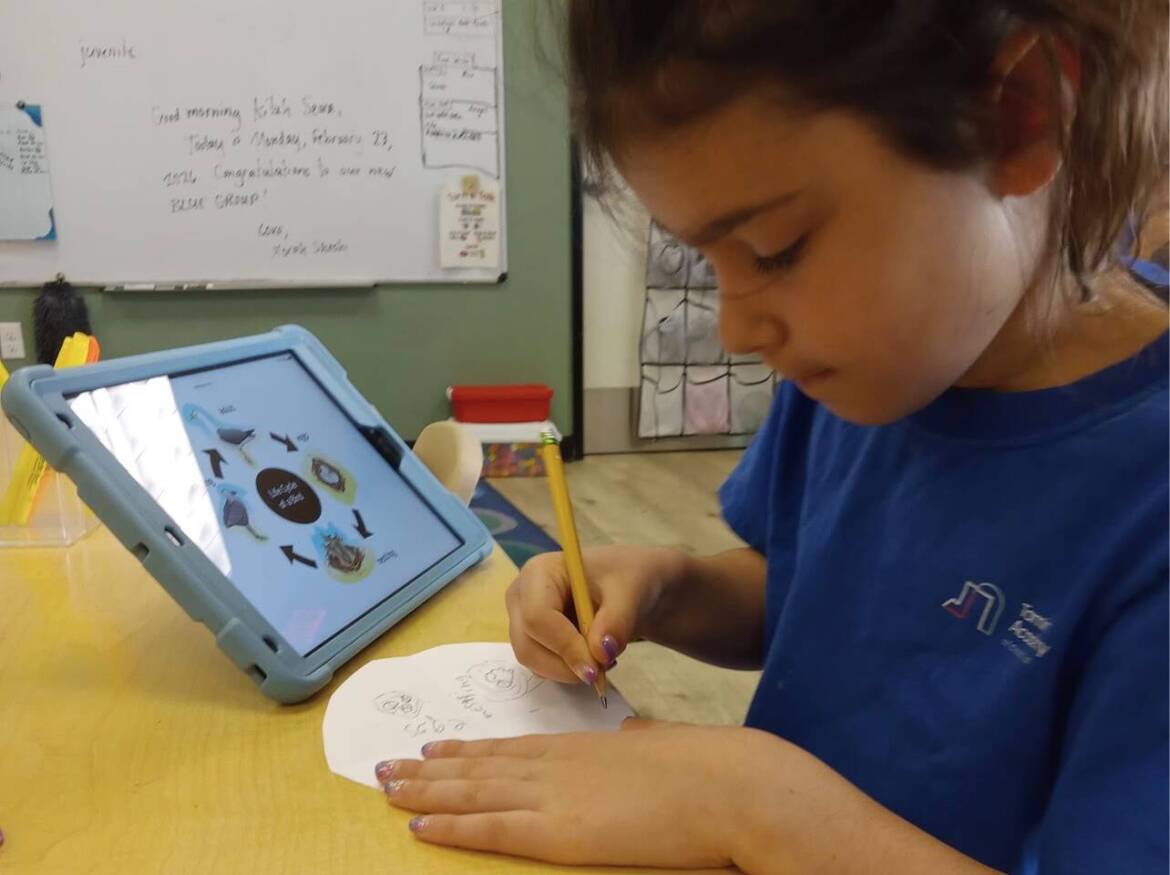
In the growing age of tech and AI, Tamim is continually incorporating elements that best teach students the skills they need to prepare them for new technologies. After all, nearly every industry is rapidly redefining employee roles and expectations. By the time our children are ready to start their careers, the technology landscape will be drastically different than even what we see today.
Our approach is a blend of old and new; proven teaching methodologies along with modern enhancements.
It’s easy to get caught up in the vision of the digital age, painted by promotional materials and scholarly articles on Ed Tech. Solutions to improve classroom learning are everywhere, and include educational apps for gamified lessons, integrated technologies such as tablets and smart boards, and now AI teachers.
Watching one of Apple’s Ed Tech promotions, for example, shows just how capable a fully integrated classroom can be: students learn in a flipped-classroom setting through videos on their iPads, work with peers to easily spin up presentations using content-creation software, and, with the tap of a button, share and present their findings to the class. It appears incredibly streamlined and efficient. It is hard not to be awed and inspired.
But after being inspired it is even harder to remember that Apple sells those devices and that software. It is harder to remember that the Ed Tech industry is worth billions of dollars, and that the funding does not go to schools but to companies who received R&D grants and contracts with the explicit agreement of commercializing their new products (both links point to government websites on funding).
It’s important to paint this little bit of skepticism around all the new Ed Tech offerings to be able to ask the right questions.
Tamim’s approach is to take the elements of Ed Tech that we know work and avoid the pitfalls that many schools get trapped in when they buy into classroom technology without a definitive purpose.
Gamified Learning is one of these elements. This term is widely used for educational apps, describing software that covers school subjects with an overlay of mechanics like experience points, competitive leaderboards, and incremental progress rewards to incentivize self-learning. A lot of research will point to its improved student engagement and some improved test scores.
But the same research often fails to consider the students’ abilities to apply their learning in non-gamified contexts or the effects of hacking what would otherwise be a student’s chance to learn to motivate themselves. If a person is presented with a deadline for work that they have to do and is not given a gamified context to do it (think every single job), they will struggle if they have not found and practiced their own individual techniques for pushing through something hard.
Yet there is proven merit to the philosophy. Tamim uses elements of gamified learning through in-person instruction, appropriate for the age and level of the students.
-
-
- Projects are designed to give students freedom to select topics and approaches fitting for the unit, incentivizing them to make learning their own
- Communal rewards like the ability to earn new books for the school library are given to the class for working together
- Public acknowledgement of achievements is a big deal here; it’s promoted in the classrooms, decorations, and hallways, such as through Siyums (Torah learning celebrations) where students march down the halls chanting “Chazak Chazak veNitChazek” (Be Strong, Be Strong, let us be Strengthened)
- Educational card- and board-games like Outnumbered replace tablets for groups of kids to play together
- Students learn to create flipbooks and chapter books of their own, telling stories about the lessons they learn in class
- Frequent field trips reinforce classroom learning, like the 4th and 5th grade trip to the Arizona Capital Museum after they learn state history
-
The list goes on, providing different incentives that reach a diverse set of student learning methods. In light of in-person gamification, Tamim does not consider the 1:1 device-to-student policy an effective method of teaching. Any classrooms filled with iPads ignore the distractions they cause and miss out on better instruction. Tamim also doesn’t see any value in teaching students “how to use” a tablet or AI–they are entirely designed for ease of use and will be picked up by the students outside of school time.
Another key element in Tamim’s curricula is teaching Tech Literacy, referring to both safety/critical thinking in internet and AI usage and advanced concepts in computers and machines, rather than video editing skills. As new grades are introduced each year to fill out the K-8 school, students will be taught subjects like coding, Computer Aided Design (CAD), and circuitry. These foundational subjects will tie directly to modern workforce needs no matter how AI changes the industries that use them, because they teach students different ways of thinking about the physical and digital world.
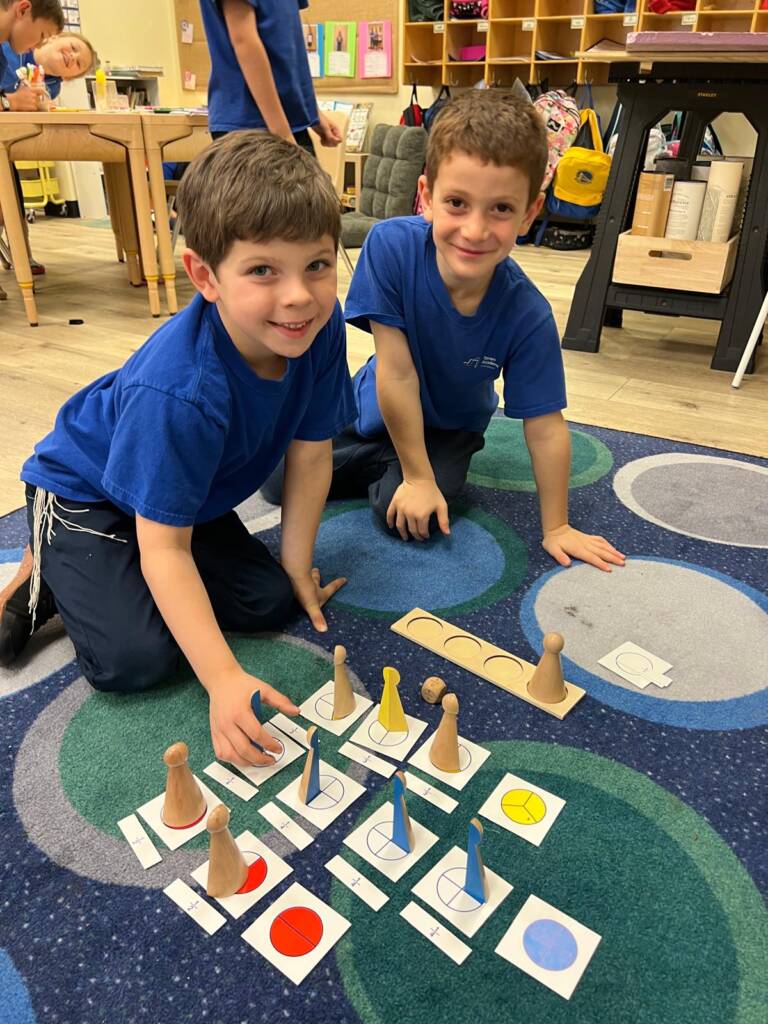
Giving students experience with programming, design, and electronics will build knowledge around how machines work under the hood. This may be useful to them directly or it will provide a schema for them to work with and around technologies in the future. Along with offerings like the makerspace and project-based learning, this will enhance the students’ ability to experiment and apply the scientific method. These will all give the students enough of a foundation to be capable of exploring more on their own as well as spark their interest in pursuing the subjects in higher learning.
And thus we come to the crux of our philosophy. To Tamim, teaching students technology and preparing them for a rapidly changing workforce means preparing them with well-practiced applications of the scientific method, core knowledge about the physical and digital world, and exposure to new ways of thinking that will be useful to them no matter what industry they go into.
After all, technology is much broader than AI tools or computers–it’s defined as the application of science and knowledge to achieve a goal. While filling a classroom with devices may seem to inspire greater learning, we’ve asked ourselves the hard questions about what has really proven to be effective. And our answer is not more apps, more tracking software that collects student data to be sold, more AI. It’s carefully selected modifications to traditional learning, the inclusion of new modes of thinking, and greater practice applying the scientific method.
And that is exactly the experience Tamim provides to its students.