
This year, our grade 1-5 students at Tamim Academy of Chandler tried something new to make Purim 2026 special. They have hosted holiday carnivals before, but they have never engineered holiday carnivals.
Based on the inspirational mini-documentary Caine’s Arcade, in which a child constructs an arcade from spare cardboard and toys in his father’s auto shop, Morah Shoshi challenged our students to build their own arcade games. The games would be played by younger grades at Tamim and Chandler Jewish Preschool during the Purim Carnival as a way to earn prizes.
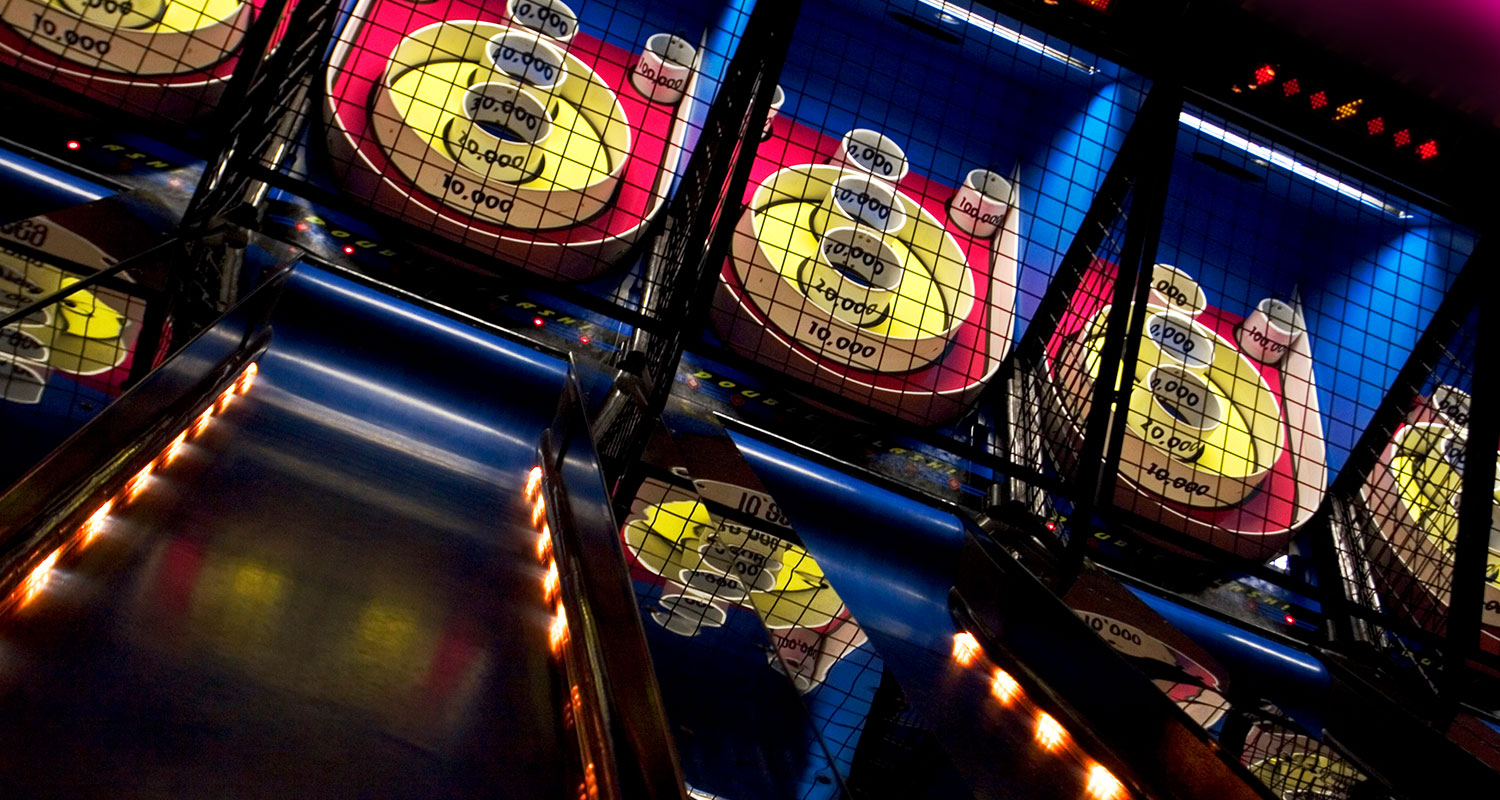
Four games were chosen: Skeeball, Basketball, Soccer/Foosball, and Air Hockey.
Teams were selected with a careful mix of grades and roles. Older grades served as “Precision Engineers”, responsible for recording team ideas and making final design decisions. Middle grades served as “Materials Engineers”, responsible for using the cutting tools, including the ChompSaw (automated cardboard cutter), to shape the components to specification. Younger grades served as “Adhesion Engineers”, responsible for actual construction of the arcade machine using glue guns and other makerspace tools. Each student was matched to their closest level of learning in mathematics-geometry and angles, measurements, addition and subtraction, spatial awareness, etc. Students aided each other in all roles, allowing for an intersection of interests and individual talents.
The students discussed strategy and realized quickly the skills they used in the makerspace throughout the year would be put to the test.
Adaptability: The Air Hockey team were told they couldn’t use actual air pressure to keep the puck frictionless. So what else could they do to mimic the effect?
Critical Thinking/Fitting the Designs to the Users’ Needs: The Basketball team knew they could increase the challenge by using smaller cups for the hoops and putting them farther away. But if their participants are kindergarteners and preschoolers, what hoop sizes and locations would offer a challenge they could actually meet?
Problem Solving: The Skeeball team planned to build a ramp leading to the scoring plate for the ball to roll on. What angle did it need to be at relative to the scoring plate?
Collaboration: Some members of the Soccer team wanted a Pokemon themed game, and some wanted a “sweets” theme of candy and treats to fit with Purim. How could they work together to finalize the designs?
Fortunately, their makerspace experiences equipped them with the Engineering Design Process (EDP) methodology they needed.
Before every makerspace project-individual or group-they fill out a Project Proposal to plan their work. It includes questions on how it will be used, what materials it needs, what it looks like, etc. The students then construct and test their ideas. After the project is completed, they note changes from the original designs.
Similarly, to build the arcade machines, the students were asked to make a blueprint with material breakdown, sizing considerations, functional requirements, and an evaluation of playability. This scope of planning was substantial because the designs had to fit together well enough to make the game work, be challenging, and be fun. These are strict constraints many students hadn’t faced before. But their approach to design followed the same EDP they were familiar with.
Every team rose to the occasion.
The Air Hockey team decided a large piece of styrofoam would be used as the rink floor with parchment paper glued on top, giving it an authentic color and making it slippery enough for a smooth-moving puck.
The Basketball team used multiple sizes of cups for their hoops and assigned point values depending on the difficulty. Two cups were glued closer to the player for those who couldn’t accurately aim farther.
The Skeeball team ran tests with different ramp and score plate angles to make sure players could score on each hole. They even tested different materials for the ball-superballs rolled better and scored more easily than ping pong balls.
The Soccer team decided to pit their themes against each other as opponents on the field-Team Pokemon vs Team Sweets. They then tested the field leveling, foosball player spacing and heights, and dowel/handle locations to make sure the sides were evenly matched.
The students also devised point systems with values being assigned to both accomplishments in the arcade and to the prizes. They drew the signage, cut and wrote every point ticket, decided the snack prizes, and made the take-home prizes including student-sewn stuffed animals and Purim themed magnets and masks.
During the Purim Carnival, the students introduced each pre-k and kindergarten participant to the games, strategized with them about point values and what they needed to win to get prizes, showered them with encouragement after both successes and failures in the arcade, and joined in with them in their celebrations of success and Purim themed fun.
In the debrief that followed the holiday, the students reflected on what went well and what they wanted to improve or add next time. All the students shared pride in what they accomplished as well as excitement for bigger challenges to come.
These Tamim students, and those to come, will continue to be challenged with project-based learning opportunities that deepen their engineering mindset. These projects will be tied into their Jewish learning and experiences to further build meaningful spiritual connections that will grow with them throughout their lives.